Showing posts with label Episode Order. Show all posts

Sunday, 17 January 2010

McGoohan on my Mind: Harmonising the Disharmonious - The Filler Episode that took longest to make and cost more than any other -Conundrum.

My very first Blog was on the subject of that arch *Filler Episode*, The Girl Who Was Death. Alternately vilified or dismissed by many observers as cheap none sense or amusing kitsch, I explained my viewpoint of how this (in effect) penultimate episode was used by McGoohan to strip away the fourth wall of reality, in a theatrical sense and launch his viewers into the final two-part epsiode, that ran the gamut of the purest stage-surreal theatre to the glitziest filmed special-effects trickery of the television medium.

For my 21st Blog, I would like to try to make amends for not stopping at 17 by focussing on the arguably archest of Filler episodes, Living in Harmony. This is of course the infamous Cowboy episode, whose original title of Do Not Forsake Me, Oh My Darling, was transferred to an episode carrying the pedestrian title up to that point of Face Unknown. Thus the title-song of one of the greatest Individualistic Westerns of the 1950's, High Noon, found itself primarily referring to the lost and previously forgotten fiancee of the hero, Number Six, whilst the Western resume of the adventures of our hero so far, was named after the town in which he now found himself, Harmony. Living in Harmony was shown as Episode 14, immediately before The Girl Who Was Death and one of its small aside roles could have been to introduce the notion that children were present in the village.


Curiously enough, one of the criticisms I've read of the episode The Girl Who Was Death is that it uses children as a plot device and yet children had never been seen in the Village up to that point - yet another Fan Myth, as you can see. Did McGoohan introduce them in Living in Harmony for precisely the purpose of utilising the device of children in the very next episode? Who knows? You decide for yourself, but bear in mind that children were specifically requested for Living in Harmony, according to Frank Maher, who provided his own as two of them.

The genesis of Living in Harmony has been chronicled in some aspects by the evident initiator of the concept and to some degree, the actual script-writer: Ian Rakoff. Writing in his effective autobiography, Rakoff describes his arrival in the world of The Prisoner sometime around the latter weeks of 1966 or early weeks of 1967, depending on how you read his memoir, which is infuriatingly date-unspecific. His script passed through the filter of David Tomblin to Patrick McGoohan, who, Rakoff tells us, had personally comissioned the story and seemed to have taken a great interest and enthusiasm in it, not withstanding his later comments in interviews congratulating interviewers on their perspicacity of noting the episode's *filler* nature. Ian Rakoff's background story, and a current interview (at 2010) is included here:
http://electricsheepmagazine.wordpress.com/2009/12/30/electric-sheep-podcast-living-in-harmony-with-ian-rakoff/
His story is an interesting and informative one but of course, as he admits himself, he had relatively little contact with McGoohan and just like most other of those closely associated with the Prisoner Project, seems not to have been privy to the close-knit producing/directing team of McGoohan and Tomblin. Reflecting on the mirrored images he presents might benefit from considering what Living in Harmony was actually seeking to add to the 17 episode run of The Prisoner.

In the course of his descriptions of his version of Living in Harmony, Ian Rakoff does not really explain to the reader what it was about the final form of the episode that he found so alien, or as he writes in his memoir, "Watching the episode was like having my insides torn out. For a moment I couldn't believe I'd written any of what i was seeing. It seemed familiar but from somewhere far away and long ago. Dialogues struck chords." Could it be that the big difference that he discerned was that the Cowboy episode was no longer an episode? Like The Girl Who was Death. Living in Harmony was no longer seeking to progress the story of The Prisoner. Instead it served as a resume of the entire concept of the series itself, to date; but by translating The Prisoner into a cowboy fable McGoohan was making the viewer find the universal nature of the story he had been crafting. The Cowboy Western was an apocraphylic format. High Noon, from 1952 was vilified by some elements of the Hollywood. It has been cited as an allegory itself "This film was intended as an allegory in Hollywood for the failure of Hollywood people to stand up to the House Un-American Activities Committee during the Sen. Joseph McCarthy Red-baiting era." http://www.imdb.com/title/tt0044706/trivia

However, it should also be remembered that High Noon received four Oscars, so Hollywood certainly gave the movie its full blessing, with John Wayne collecting the award on behalf of Gary Cooper. Another movie from the same era also has echoes of Living in Harmony: "In the old West, a small frontier town is being controlled by ruthless mob boss Decker (Lyle Bettger) and his cronies. After the local sheriff dies under mysterious circumstances, Decker arranges to have the town drunk (Thomas Mitchell) appointed sheriff, thinking he will be ineffectual. But the new sheriff sends for Tom Destry, son of a famous two-fisted lawman, to be his deputy. When Tom (Audie Murphy) arrives, he isn't exactly the swaggering he-man the sheriff had in mind. In fact, Destry doesn't even carry a gun. But the new deputy's mild exterior masks a fierce determination to see justice done, as Decker and the other locals soon discover." http://www.imdb.com/title/tt0046906/plotsummary

Interestingly, the first movie incarnation of Destry was in a 1930's movie starring James Stewart who McGoohan is known to have personally admired.

Whatever its antecedents and whatever Ian Rakoff's original script's unique elements may have been, what Living in Harmony did was to tell the story of The Prisoner all over again, but this time in a Western town. This is almost certainly not what Rakoff might have intended, especially as he seemed to be under the impression that his script was to be just one of several more, leading into a further season of shows.

It is a remarkable fact that High Noon is said to have taken four weeks to shoot, whereas Living in Harmony is believed to have taken five weeks, at least so it is reported in the 2009 book that accompanied the network dvd releases. Many of my earler blogs have challenged some of the long-repeated but frequently incorrect, misleading or downright deceitful myths about the production history of the remarkable series that is McGoohan's Prisoner. Some consideration of the circumstances surrounding the making of Living in Harmony are worthy of logical analysis. Much of the production history has been concoted by interviewing cast and crew over the several decades since 1967. Many of the testimonies are completely contradictory and Living in Harmony is a real case in point. It is regarded as a filler episode and yet it appears to have had the longest shoot of any episode. It is termed a filler episode and yet it appears to have been the most expensive single episode produced, the spent budget estimated at around £75,000.

The long-held view of The Prisoner production by its self-appointed experts has been that as Spring 1967 ended, with 13 episodes pretty much *in the can*, a second season of 13 were planned. This claim is made despite the unambiguous denial of the owner of the Production company, Patrick McGoohan. One version of the myth that attempts to contradict McGoohan is that the cast and crew were asked to introduce ideas - this is indeed how Ian Rakoff came to submit his original ideas for Living in Harmony - However, so far as is recorded there were at least four other unused ideas or script outlines that were never used, despite the fact that yet another idea was concoted between McGoohan and Tomblin, to make what became The Girl Who was Death. Despite still not having written his final script, McGoohan happily spent five weeks shooting one episode, when the cult historians would have you believe he was desperately seeking to scrape together as many as six more episodes. He was also happily spending nearly 30% more on this one episode than he had spent on any other, and these same historians will have you believe his budgets were being breached and Lew Grade's accountants were on the warpath. Clearly the real history Patrick McGoohan was living was a very different history to the one now frequently shoe-horned against these plain facts.

Most of the history writers will then attempt to explain this bizarre contradiction of the circumstance of real life against their concocted history-making by implying McGoohan was wilting under all the pressure and losing control of the whole project. What could be further from the truth? Consider that the Producer, Star, erstwhile Director and Script-writer was simultaneously making a Hollywood movie, and juggling his TV project, and when he had finally completed 16 episodes, was still able to write what is acknowledged by most as one of the most brilliant hours of imaginative TV (even if some find the imagination too surreal and full of avoidance). If the historian contends that his intention was to make 26 epsiodes in total, as all the *Official* historians seem to, then this behaviour does seem wild and illogical.

However consider what McGoohan says actually happened. He said it in 1967 and he said it in 1977 and he said it any other time he had the patience to answer the question over the ensuing decades. He said he only ever intended to make 17 episodes. Once a person is prepared to actually believe what the man tells them, then his behaviour in 1967 suddenly makes almost perfect sense.

By the end of Spring 1967 he had 13 episodes *in the can*, albeit some editing of the material no doubt remained to be done. From his perspective, he only had four more episodes to make. He could safely leave David Tomblin to tinker over the summer, making the one that didn't need him anyway - Do Not forsake me Oh My Darling - a script that he had had for some time. He had determined to make a Cowboy episode because he loved the cowboy hero (he once described John Drake as being like a Western hero). David Tomblin was going to concoct a segue from *reality* into a story-book in The Girl Who Was Death, McGoohan already had his overtly theatrical and penultimate episode Once Upon A Time in the can too, so all he had to do was write the final, 17th episode, and he had nearly eight months to do that. Suddenly, by simply believing Patrick McGoohan, you have the hugest contrast in the story. Suddenly, rather than a production in crisis and a man teetering on the verge of a breakdown, which is what all the *Official* histories will tend to make you believe, you have instread, a very professional, experienced actor/producer/director/writer giving himself a perfectly easy schedule to wrap up his 17 episode show - the 17 episodes that as early as February 1967 was publicly noted in the American press as having been contracted to and by Mike Dann, the CBS Vice-president.


Sometimes a story is complicated because nobody wants to believe the simple answers. As Patrick McGoohan once remarked,

"I think that some people do have a fondness for enigmas.......... but as well, they like something of a mystery, you know?"

History is not always what other people tell you it was. Sometimes by studying what people do and say themselves rather than what other people say they did and said, you can see exactly what really happened.

Wednesday, 23 September 2009

McGoohan on my Mind: Count the number of the beast: for it is the number of a man's will

In one of my last Blogs I moaned a bit about the ineptitude of a very recent Prisoner book. That is of course a little unfair because when Prisoner fans restricted themselves to verifiable facts they can be very good. As the rhymes says, when they are good they are very good, but when they are bad they are wicked. In that spirit of bonhomie I should note that their various researchers have done a splendid job of unpicking the production history of the show. However one of the first coherent articles about the most arcane of arcane issues that I wish to address in this Blog came from outside the 6-of-1 Club publications. First published in 1988, the articles are reproduced webwise here:
http://www.the-mausoleum-club.org.uk/timescreen/Trial%2011/ts11cv.htm
and here:
http://www.the-mausoleum-club.org.uk/timescreen/Trial%2012/ts12cv.htm

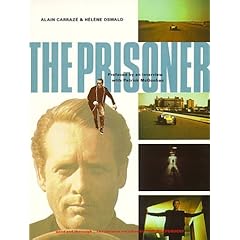
Oddly enough, one of the first Cult-sponsored books appeared around the same time. In 1989 French 'Le Prisonnier' fans produced this one.

In truth it is just one of a long series since and wasn't the first. Note I use the term series, as distinct from a serial. Patrick McGoohan, in one interview, back in 1979, to a 6-of-1 co-ordinator, tried to clarify the difference. It’s almost as arcane as Prisoner lore, but I think the point McGoohan tried to make was that a serial is a pre-defined number of episodes of a story whereas a series is a number of episodes that, at any one point of time is undeclared. The first series of Danger Man was a block of 39 episodes, so in one way it could be defined as a serial (albeit an unusually long one) but it is generally referred to as a series because when broadcast nobody watching knew that only 39 had been made,and the broadcasts were spread over two or more years. It is not always 39 course, as can be seen at this excellent web-page: http://www.danger-man.co.uk/episodes.asp

A contemporary series with The Prisoner was Man in a Suitcase and 30 episodes of that were made. Another contemporary series was The Saint: “The black-and-white episodes of The Saint were made in two production runs, the first, of 39 episodes and the second, of 32 episodes. Series 5, the first to be produced in colour, consisted of a production run of 32 episodes. The second colour production run consisted of 15 episodes http://en.wikipedia.org/wiki/The_Saint_(TV_series

Anyhow, one of the first published prisoner books was this French one and the authors were even able to obtain interview time with Patrick McGoohan, which is more than any of the English-language book ever managed to obtain. In 1977, Patrick McGoohan had made it very clear (in his TV interview with Warner Troyer) that he had intended to make and did make 17 episodes of his show. By 1989 however, the Prisoner fans had re-written this history to suit their own version of the past. This passage, from the 1989 French book is fairly typical of the cult-fan version of the events:

“A year after going into production only 13 episodes had been made (whereas Man in a Suitcase had completed 30 episodes in an equivalent period). Moreover rumours about McGoohan’s erratic attitude were beginning to circulate. Four more episodes were ordered in a desperate attempt to make the series saleable”

Quite how the authors came up with this *explanation* is only explicable because they were deeply informed by the version of events formulated by the cult consciousness over the previous decade. By 1989 of course, we are 22 years along from the actual events and 12 years on from the start of the cult.

Those in control of the present had also taken control of the past.
As with most prisoner books the authors were misleading their readers anyhow.

Researcher Andrew Pixley has confirmed by archival checks that:

Man in a Suitcase began it's primary shooting schedules in August 1966 and by the end of April 1967, there were 16 episodes ‘completed’.

The Prisoner began its shooting schedule work in September 1966 and by the end of April 1967, there were 13 episodes ‘completed’

A negligible difference, completely the opposite to the story related in most *authorised* books. The story of the two shows thereafter was very different, but this was by design, not by accident or circumstance. Man in a Suitcase production continued through the summer of 1967. The Prisoner production stopped after April and was not re-commenced until August 1967.

The main contention of prisoner fan books concerns the reasons for number of episodes being 17 and the quote from the French book is typical of them. They have derived a notion that because a block of 13 episodes formed the first part of the production process that there was an intention to have a further 13 and perhaps even another 13 after that. McGoohan, in 1977, had told them his truth, but as was typical of the cult fans, they simply did not believe him. They didn’t believe him about Rover's genesis and they didn’t believe he intended to make 17 epsiodes from a very early stage of production , maybe the very beginning, as he had recounted within his accounts of negotiating with Lew Grade.

In fact, despite all the fan-club rumour-mongering and their unattributable reports of off-stage whispering, there is clear and irrefutable evidence that the number of episodes had been confirmed at 17 within 1966. In February 1967 an American newspaper article quotes Mike Dann as having purchased at least 17 episodes of the new McGoohan show called The Prisoner. From the tenses implied within the quotes it is evident that Dann had first confirmed the deal before a single episode had been shot.


The Prisoner project had formally been on the boil since April 1966 of course, with the pre-production planning. There can be no doubting the pressure McGoohan would have been under. He had started his project wanting to make a seven-part serial. Under pressure from Lew Grade he increased that number by more than double. It seems that pressure continued and was even increased by additional pressure from CBS in America. In an article by Robert Musel from July, 1966 McGoohan had been quoted as saying that the series would be a minimum of 13 and a maximum of 30 and was plainly resisting what he perceived as urging to "scrape the bottom of the barrel". He wanted a limited serial, but his customers wanted MORE.....


This explains the making of the first 13 as a production block and why that block of 13 proceeded more or less the same way as did the sister series being produced by Sidney Cole. Any continued negotiation during that shooting season of 1966 did end however, and the deal for 17 was concluded. Before the August 1967 second shooting schedule ever began the number of 17 was reiterated as a certainty, with McGoohan’s clear statement that he would be making only four more episodes.

A year earlier than the Carraze book TV those Timescreen writers wrote some excellent articles about The Prisoner, but even they found themselves subscribing to the cult version of events, suggesting Mcgoohan's project was somehow whirling out of his control, so inculcated was this version of history impregnated in the whole echelon of TV history writers.
“The decision was taken to end the show prematurely in ITC's opinion and the star announced during the making of The Girl Who Was Death that the next episode would be the last, and he would write it. http://www.the-mausoleum-club.org.uk/timescreen/Trial%2012/ts12cv.htm
These cross-currents emphasise the deep-seated disbelief of McGoohan’s own accounts of the events that fans have promulgated as they pursued their own agendas of *discovering the truth*.

Lew Grade mentions the project in his autobiography. He seemed to have little problem recalling the events:

I had lunch one day at CBS....... I told them I had a project called 'The Prsioner' with Patrick McGoohan, and showed them a portfolio of pictures of the village of Portmeirion, which was the location we intended to use. "At the moment though, Patrick McGoohan only wants to make 17 episodes," I said. "How much do you want?" they asked. I told them the terms and they said we had a deal.

The story is certainly not entirely a simple one. In fact, if you're not a student of this particular conundrum and have reached the end of this blog, then you may be feeling like you've just tried to speed-learn differential equations. What is clear from this unbiased and contemporary and documented history is that some of the more extreme accounts of the production history of the show, published in books since the 1980's are plainly fictional and often misleading.

I cannot finish this Blog without giving full credit to a fellow-researcher. We first met whilst mutually disassembling the big lih about Vietnam and the cowboy episode (see one of my first blogathons). Anyhow Sheriff Tomm and I became determined to *clean up the town* and much of the previously unknown American material I have referred to in my blogrolls has been located by this young American hero, and I would like to pay tribute to his discoveries right here and now...

Yeeha! Sheriff Tomm

I do not know what fate awaits me
I only know I must be brave
And I must face a man who hates me
Or lie a coward, a craven coward
Or lie a coward in my grave

Monday, 1 June 2009

McGoohan in my Mind - The Plot Keeps getting Thicker


The Prisoner, made by Patrick McGoohan's Production Company, Everyman, in 1966-1967 was a self-contained enigma of 17 episodes. In 1977, Patrick McGoohan was asked during the course of his first public outing as the series auteur, on Canadian TV:

Audience member:
One analogy that comes up, from literature, is with epic poetry, or with an epic. And "The Prisoner" seems to have all the qualities that belong to an epic, including the kind of structure which you ended up with: the thing that began with seven parts and ended with seventeen. There have been a few peculiar epic works which have done that sort of thing or been on the way, Spencer's "Faerie Queene" for instance, or Tennyson's "Idylls of the Kings" ..."Idylls of the King" which became a twelve-part non-epic with all the properties and qualities of an epic. I have one question based on that perhaps peculiar observation, and that is:


Unfortunately McGoohan's face was not shown by the camera as this tortuous route somehow led to a simple question about Angelo Muscat that he was able to answer. McGoohan was fond of suggesting that people should see what they wanted to see and how that was at the basis of his programme, but in later years he was quoted as wearily commenting that

"they have analysed what should never have been analysed".

He seemed the first to want to leave the programme to speak for itself in 1967 and after this brief dalliance ten years later, seemed to want to leave it alone thereafter. The Canadian resurgence of interest in 1977 coincided with one in Britain and although McGoohan condoned the British fan club by agreeing to become it's honorary president he was never to attend any of their annual or bi-annual events celebrating the show in the ensuing forty years, not unlike William Shatner and Star Trek Conventions, until 1994. However unlike Bill, Pat ultimately preferred never to go where he had not gone before.


In 1978 the existence of the Six-of-One Appreciation Society was noted in an American news report as the only other TV series other than Star Trek to have such a society. The Chicago 'paper paid a visit to the 1978 Portmeirion Convention and noted the national co-ordinator's comment that, "The growth of the computer society is worrisome. Individual freedoms could be at risk." The reporter also attended discussion groups where questions were being asked,

How do we know who to trust?

What actually is 'trust'?

Should we believe in premonition?

Do we know our inner selves?


Answers were being sought in 1977 to questions posed in 1967. With the passage of time, attitudes had changed of course and it was perhaps inevitable that questions asked out of the time that they were posed in, began to give rise to answers that may not have been imagined in 1967. Indeed some of the very questions themselves had naturally been answered in 1968 by those in television press lauding the US debut of The Prisoner, Rick du Brow's article headlined:

"McGoohan 'Prisoner' Trumpets Individual'

and it's concluding sentence,

"Television has never seen anything quite like 'The Prisoner'.. Or Mr. McGoohan, for that matter."

seems to demonstrate unequivocally that the uniqueness of this TV project was recognised within it's own time and place. The fact that the show had a full repeat re-run in both England and America, at the time of it's initial release also makes self-evident the show's success and popularity right from the very start of it's public existence. The show was also sold in all the European markets and found a niche in Japan too, an emerging important market-place, not to mention South America. Modern statements of The Prisoner somehow 'failing' on it's first release are well wide of the mark and the programme easily made a profit for the key financier, Lew Grade and his ITC company. Disinformation is however endemic in the published world of The Prisoner business, as my blogging will show over and over again, in the coming chapters.


It was only natural however that a new generation, or a generation of children become adults by 1977, would want to rediscover an enigma for themselves. In Britain the show had indeed been difficult to see since it's second summer repeat run in 1968, although repeated it certainly was in 1971 by LWT. The regional ITV channels around the UK may have used the 17 episodes as filler entertainment on a number of occasions yet to be fully pinpointed prior to the 1976 showings that led to the forming of Six-of-One. Had the programme been made by the national Channel, the BBC, then no doubt the occasional repeating of this show on a national network would have kept it pre-eminent as as national piece of culture long before. In the 1980's the show was to truly be reborn as a national cultural icon by the national broadcasts of every episode by the then new, Channel 4; broadcasts in no way uninfluenced by the burgeoning Appreciation Society and it's more influential members who ensured Channel 4 did not make the monumental error of broadcasting episodes in the wrong order......... an irony given later developments in their fandom.
Less committed fans like myself were also thrilled to be able to see a show they had the fondest of memories of, for the first time in many years. The coincidence of this showing with the availability by then of the VHS recorder, led to my first personal video library, recorded. then illegally (by the letter of British law at that time), of 16 out of the 17 episodes. I missed 'Do Not Forsake Me Oh My Darling' due to machine malfunction but comforted myself that as McGoohan was barely in this episode, it was the one I would miss least!

There was certainly no scarcity of showings in the USA. Following its two Networkings by CBS in 1968 and again in 1969, the programme was picked up by regional broadcasters and was never to be off the screens in North America each year, albeit never networked again. It was no doubt the continual drip-feed of this unique and quirky show that led to the Canadian College phenomenon, when McGoohan's prisoner became a subject suitable for academic qualifications, a news-story in itself and which phenomenon led to the programme becoming increasingly re-invented by individual and therefore influential fans. The re-inventions began by juggling the order of episodes, with the erroneous notion that somehow, despite the lavish care that McGoohan and his company had self-evidentially applied to their product, they had neglected to ever figure out what order the episodes were intended to be in.

The contradictions in the evidence that began to be presented by the increasingly academic interest in the series is never more illustrated than by the fact the researchers suggest it was, episode for episode, the most expensive TV show ever produced in England, up to 1967, and yet the same researchers deemed that nobody had bothered to ensure the episodes were seen in any particular order!! The brain-freeze of this fan paradox never fails to chill me. The repeated watching of the show does of course allow that some of the episodes can be jumbled a little without seriously affecting the pleasure of the show overall, but as with every allegory, pursuing your own message leads to the same dead end as any Theory of Everything.

Fondly remembered as they seem to be by that generation of the late 1970's in Canada and North America, the intricate explanations of each episode before they saw it, no doubt led to new or implanted ideas about the show, in these more recent viewers. The desire to explain the show is of course its main reason for longevity and appeal, together with its high standards of presentation and general cinematography. In later years this practice of someone *explaining* the series was continued and a well-known PBS exponent is recorded here, from 1990. This wiseacre has evidently been fully briefed by the fan club and attempts to justify placing Episode 9 as Episode 3 as well as making a number of other dubious comments. Welcome to the wacky world of fan appreciation............
http://www.youtube.com/watch?v=jGmubS3e03c

Naturally, as fans battled with one another's minds to ensure their interpretation was the definitive one, their failure to agree led to their seeking someone with the answers. Thus, in 1977, Patrick McGoohan was asked to explain his secrets. His audience was clearly baffled by McGoohan's modesty and sometimes halting explanations of how 'Rover' (for instance) had first been thought of and other key elements of the series. Watching the Troyer Interview today one is haunted by the disappointed faces of the audience as their supposed auteur seemed unable to supply all the answers they expected. If he didn't tell them, how were they supposed to know? By the time the British fan-club came to the fore, they were not going to take "What do you think?" or "It was just something we made up at the time" - for an answer.

Watching the show itself may have helped them understand McGoohan's reticence,

Questions are a burden to others.

Answers a prison for oneself.

But they wanted answers and answers they would have. If McGoohan wouldn't explain, then by crikey they would find someone who would! And so the next stage began, and a publishing bean-feast would be a comfortingly profitable side-effect for some of them. One book in particular seems to have got matters off to an excellent and mostly misleading start. Moor of that, next time.


Sunday, 31 May 2009

McGoohan in my Mind - Ruminations Upon An Enigma From Long Ago


If anything demonstrates the over-weening arrogance of fans of The Prisoner mucking about with the episode order of McGoohan's meisterwerk, it is surely putting this brilliant pece of allegorical theatre into any position other than it's carefully selected placing, just before the two-part denouement of this uniquely inventive series. The piece begins with a sequence of vignettes illustrating that many of the apparent central tenets of the show to that point are merely means to a dramatic end. Hence we have a number of mild parodies of secret agent cliches.

Interestingly however some of these are quite inventive, demonstrating the respect McGoohan retained for the milieu in which he had risen to international prominence in 1967. A number of shows are probably referenced: certainly The Avengers, which was by this time preminent in the secret agent genre, but a show in which imaginatively silly self-mockery was a large part of its appeal... or should that be a Peel............ The sex appeal, or should that be a Peel that had so far often been absent in The Prisoner comes to the fore, with the delicious legs of Justine Lord mesmerising the viewers as the girl who is death sets about her mission. Mission Impossible is another show mildly mocked as the Holmesian British agent receives his recorded instructions, but rather than self-destruct, the recorded message talks back to our hero. And so the show must go on.......... and on and on it goes through a funfair... a veritable Amusement Park...........


The skilful use of Narrative, often the strongest suit of the noir days of Danger Man in the earlier 1960's, resets the mood as our hero enters the deadly warehouse. Against a background of cleverly circumvented puzzles the deathly girl explains the paradoxes we face.......

You are a born survivor. I am a born killer.

Is your heart pounding? Your hand shaking?
That's Love my darling.

Don't let silly pride stand in your way.

One or two Jams (sic) Bond references had been apparent as the hero emerged from the steam bath, dressed in his deerstalker outfit, much as Bond strips off frogmen suits and is dressed in an evening suit underneath. The escape with the bulldozer also preempts many movie tricks as the hero uses the spade to create himself a veritable tank, but perhaps the most telling allegory was the automatic Bren Gun scene. This directly mirrored a closing scene in the final Japanese adventures of John Drake, when a ludicrous machine gun pops out of the uber-villains desk, in Shinda Shima. Clearly gutted by the direction Sidney Cole was taking his beloved show, McGoohan famously walked away from it. Fan legend has it that this whole episode "The Girl Who Was Death", was derived by Everyman co-producer David Tomblin from an unshot episode of the Danger Man series that never was. The bren gun scene is perhaps Mcgoohan's pointed riposte that if the likes of George Markstein (the new script editor on the final two episodes of Danger Man to be filmed) had thought he could turn McGoohan's beloved John Drake into the utterly crass secret agent so favoured after 1965.... well he had had another think coming and it was Goodnight George........


And so into the final scenes, which were vital to McGoohan's story-telling, containing as they did the introduction to the Chamber stylisations that would ultimately host Fall-Out, and indeed the Chaplinesque battle with the Napoleonic forces almost prefigures the more violent Pantomime still to come in the conclusion, not to mention the notion of a Rocket.... So why was this episode so important? Why was this episode so carefully constructed and placed where it was?

Any serious viewer will see the significance immediately. This was the theatrical announcement of the classic theatrical actor.......... This was McGoohan's dismantling of the Fourth Wall.

And that is how I saved London from a mad scientist

Goodnight Children

and then Number Six looks at us, through the figure of Number Two and adds....

Everywhere


And so, we now know that what we have seen has been a story..... a show..... it was never meant to be real..... There is no Village -pretend or otherwise...........


Children...................

Brilliant. As always McGoohan's method is crystal clear to anyone willing to see, but those who choose to look the other way will always see something else. As McGoohan once remarked about The Prisoner himself,

"I had a chance to do something nutty, so I did",

and it seems just like McGoohan to use such under-stated modesty to deflect the idle TV-goggler from noticing his instinctive and inventive genius. He made that glib and self-mocking comment some fifteen or more years after he had made The Prisoner. At the time he made a carefully constructed TV series that hangs like a beautifully-tailored jacket would have done, from the shoulders of John Drake. Because it was so evidentially beautifully crafted he never felt the need to defend its cut or style from the yammering fashionistas who have since stabbed at his elegantly booted ankles with their puny dwarf daggers of zany venom and bile. His were the Shoulders of a Giant.......


Many Happy Returns Number Six