Showing posts with label Number Six. Show all posts

Sunday, 17 January 2010

McGoohan on my Mind: Harmonising the Disharmonious - The Filler Episode that took longest to make and cost more than any other -Conundrum.

My very first Blog was on the subject of that arch *Filler Episode*, The Girl Who Was Death. Alternately vilified or dismissed by many observers as cheap none sense or amusing kitsch, I explained my viewpoint of how this (in effect) penultimate episode was used by McGoohan to strip away the fourth wall of reality, in a theatrical sense and launch his viewers into the final two-part epsiode, that ran the gamut of the purest stage-surreal theatre to the glitziest filmed special-effects trickery of the television medium.

For my 21st Blog, I would like to try to make amends for not stopping at 17 by focussing on the arguably archest of Filler episodes, Living in Harmony. This is of course the infamous Cowboy episode, whose original title of Do Not Forsake Me, Oh My Darling, was transferred to an episode carrying the pedestrian title up to that point of Face Unknown. Thus the title-song of one of the greatest Individualistic Westerns of the 1950's, High Noon, found itself primarily referring to the lost and previously forgotten fiancee of the hero, Number Six, whilst the Western resume of the adventures of our hero so far, was named after the town in which he now found himself, Harmony. Living in Harmony was shown as Episode 14, immediately before The Girl Who Was Death and one of its small aside roles could have been to introduce the notion that children were present in the village.


Curiously enough, one of the criticisms I've read of the episode The Girl Who Was Death is that it uses children as a plot device and yet children had never been seen in the Village up to that point - yet another Fan Myth, as you can see. Did McGoohan introduce them in Living in Harmony for precisely the purpose of utilising the device of children in the very next episode? Who knows? You decide for yourself, but bear in mind that children were specifically requested for Living in Harmony, according to Frank Maher, who provided his own as two of them.

The genesis of Living in Harmony has been chronicled in some aspects by the evident initiator of the concept and to some degree, the actual script-writer: Ian Rakoff. Writing in his effective autobiography, Rakoff describes his arrival in the world of The Prisoner sometime around the latter weeks of 1966 or early weeks of 1967, depending on how you read his memoir, which is infuriatingly date-unspecific. His script passed through the filter of David Tomblin to Patrick McGoohan, who, Rakoff tells us, had personally comissioned the story and seemed to have taken a great interest and enthusiasm in it, not withstanding his later comments in interviews congratulating interviewers on their perspicacity of noting the episode's *filler* nature. Ian Rakoff's background story, and a current interview (at 2010) is included here:
http://electricsheepmagazine.wordpress.com/2009/12/30/electric-sheep-podcast-living-in-harmony-with-ian-rakoff/
His story is an interesting and informative one but of course, as he admits himself, he had relatively little contact with McGoohan and just like most other of those closely associated with the Prisoner Project, seems not to have been privy to the close-knit producing/directing team of McGoohan and Tomblin. Reflecting on the mirrored images he presents might benefit from considering what Living in Harmony was actually seeking to add to the 17 episode run of The Prisoner.

In the course of his descriptions of his version of Living in Harmony, Ian Rakoff does not really explain to the reader what it was about the final form of the episode that he found so alien, or as he writes in his memoir, "Watching the episode was like having my insides torn out. For a moment I couldn't believe I'd written any of what i was seeing. It seemed familiar but from somewhere far away and long ago. Dialogues struck chords." Could it be that the big difference that he discerned was that the Cowboy episode was no longer an episode? Like The Girl Who was Death. Living in Harmony was no longer seeking to progress the story of The Prisoner. Instead it served as a resume of the entire concept of the series itself, to date; but by translating The Prisoner into a cowboy fable McGoohan was making the viewer find the universal nature of the story he had been crafting. The Cowboy Western was an apocraphylic format. High Noon, from 1952 was vilified by some elements of the Hollywood. It has been cited as an allegory itself "This film was intended as an allegory in Hollywood for the failure of Hollywood people to stand up to the House Un-American Activities Committee during the Sen. Joseph McCarthy Red-baiting era." http://www.imdb.com/title/tt0044706/trivia

However, it should also be remembered that High Noon received four Oscars, so Hollywood certainly gave the movie its full blessing, with John Wayne collecting the award on behalf of Gary Cooper. Another movie from the same era also has echoes of Living in Harmony: "In the old West, a small frontier town is being controlled by ruthless mob boss Decker (Lyle Bettger) and his cronies. After the local sheriff dies under mysterious circumstances, Decker arranges to have the town drunk (Thomas Mitchell) appointed sheriff, thinking he will be ineffectual. But the new sheriff sends for Tom Destry, son of a famous two-fisted lawman, to be his deputy. When Tom (Audie Murphy) arrives, he isn't exactly the swaggering he-man the sheriff had in mind. In fact, Destry doesn't even carry a gun. But the new deputy's mild exterior masks a fierce determination to see justice done, as Decker and the other locals soon discover." http://www.imdb.com/title/tt0046906/plotsummary

Interestingly, the first movie incarnation of Destry was in a 1930's movie starring James Stewart who McGoohan is known to have personally admired.

Whatever its antecedents and whatever Ian Rakoff's original script's unique elements may have been, what Living in Harmony did was to tell the story of The Prisoner all over again, but this time in a Western town. This is almost certainly not what Rakoff might have intended, especially as he seemed to be under the impression that his script was to be just one of several more, leading into a further season of shows.

It is a remarkable fact that High Noon is said to have taken four weeks to shoot, whereas Living in Harmony is believed to have taken five weeks, at least so it is reported in the 2009 book that accompanied the network dvd releases. Many of my earler blogs have challenged some of the long-repeated but frequently incorrect, misleading or downright deceitful myths about the production history of the remarkable series that is McGoohan's Prisoner. Some consideration of the circumstances surrounding the making of Living in Harmony are worthy of logical analysis. Much of the production history has been concoted by interviewing cast and crew over the several decades since 1967. Many of the testimonies are completely contradictory and Living in Harmony is a real case in point. It is regarded as a filler episode and yet it appears to have had the longest shoot of any episode. It is termed a filler episode and yet it appears to have been the most expensive single episode produced, the spent budget estimated at around £75,000.

The long-held view of The Prisoner production by its self-appointed experts has been that as Spring 1967 ended, with 13 episodes pretty much *in the can*, a second season of 13 were planned. This claim is made despite the unambiguous denial of the owner of the Production company, Patrick McGoohan. One version of the myth that attempts to contradict McGoohan is that the cast and crew were asked to introduce ideas - this is indeed how Ian Rakoff came to submit his original ideas for Living in Harmony - However, so far as is recorded there were at least four other unused ideas or script outlines that were never used, despite the fact that yet another idea was concoted between McGoohan and Tomblin, to make what became The Girl Who was Death. Despite still not having written his final script, McGoohan happily spent five weeks shooting one episode, when the cult historians would have you believe he was desperately seeking to scrape together as many as six more episodes. He was also happily spending nearly 30% more on this one episode than he had spent on any other, and these same historians will have you believe his budgets were being breached and Lew Grade's accountants were on the warpath. Clearly the real history Patrick McGoohan was living was a very different history to the one now frequently shoe-horned against these plain facts.

Most of the history writers will then attempt to explain this bizarre contradiction of the circumstance of real life against their concocted history-making by implying McGoohan was wilting under all the pressure and losing control of the whole project. What could be further from the truth? Consider that the Producer, Star, erstwhile Director and Script-writer was simultaneously making a Hollywood movie, and juggling his TV project, and when he had finally completed 16 episodes, was still able to write what is acknowledged by most as one of the most brilliant hours of imaginative TV (even if some find the imagination too surreal and full of avoidance). If the historian contends that his intention was to make 26 epsiodes in total, as all the *Official* historians seem to, then this behaviour does seem wild and illogical.

However consider what McGoohan says actually happened. He said it in 1967 and he said it in 1977 and he said it any other time he had the patience to answer the question over the ensuing decades. He said he only ever intended to make 17 episodes. Once a person is prepared to actually believe what the man tells them, then his behaviour in 1967 suddenly makes almost perfect sense.

By the end of Spring 1967 he had 13 episodes *in the can*, albeit some editing of the material no doubt remained to be done. From his perspective, he only had four more episodes to make. He could safely leave David Tomblin to tinker over the summer, making the one that didn't need him anyway - Do Not forsake me Oh My Darling - a script that he had had for some time. He had determined to make a Cowboy episode because he loved the cowboy hero (he once described John Drake as being like a Western hero). David Tomblin was going to concoct a segue from *reality* into a story-book in The Girl Who Was Death, McGoohan already had his overtly theatrical and penultimate episode Once Upon A Time in the can too, so all he had to do was write the final, 17th episode, and he had nearly eight months to do that. Suddenly, by simply believing Patrick McGoohan, you have the hugest contrast in the story. Suddenly, rather than a production in crisis and a man teetering on the verge of a breakdown, which is what all the *Official* histories will tend to make you believe, you have instread, a very professional, experienced actor/producer/director/writer giving himself a perfectly easy schedule to wrap up his 17 episode show - the 17 episodes that as early as February 1967 was publicly noted in the American press as having been contracted to and by Mike Dann, the CBS Vice-president.


Sometimes a story is complicated because nobody wants to believe the simple answers. As Patrick McGoohan once remarked,

"I think that some people do have a fondness for enigmas.......... but as well, they like something of a mystery, you know?"

History is not always what other people tell you it was. Sometimes by studying what people do and say themselves rather than what other people say they did and said, you can see exactly what really happened.

Wednesday, 23 September 2009

McGoohan on my Mind: Count the number of the beast: for it is the number of a man's will

In one of my last Blogs I moaned a bit about the ineptitude of a very recent Prisoner book. That is of course a little unfair because when Prisoner fans restricted themselves to verifiable facts they can be very good. As the rhymes says, when they are good they are very good, but when they are bad they are wicked. In that spirit of bonhomie I should note that their various researchers have done a splendid job of unpicking the production history of the show. However one of the first coherent articles about the most arcane of arcane issues that I wish to address in this Blog came from outside the 6-of-1 Club publications. First published in 1988, the articles are reproduced webwise here:
http://www.the-mausoleum-club.org.uk/timescreen/Trial%2011/ts11cv.htm
and here:
http://www.the-mausoleum-club.org.uk/timescreen/Trial%2012/ts12cv.htm

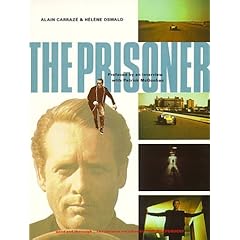
Oddly enough, one of the first Cult-sponsored books appeared around the same time. In 1989 French 'Le Prisonnier' fans produced this one.

In truth it is just one of a long series since and wasn't the first. Note I use the term series, as distinct from a serial. Patrick McGoohan, in one interview, back in 1979, to a 6-of-1 co-ordinator, tried to clarify the difference. It’s almost as arcane as Prisoner lore, but I think the point McGoohan tried to make was that a serial is a pre-defined number of episodes of a story whereas a series is a number of episodes that, at any one point of time is undeclared. The first series of Danger Man was a block of 39 episodes, so in one way it could be defined as a serial (albeit an unusually long one) but it is generally referred to as a series because when broadcast nobody watching knew that only 39 had been made,and the broadcasts were spread over two or more years. It is not always 39 course, as can be seen at this excellent web-page: http://www.danger-man.co.uk/episodes.asp

A contemporary series with The Prisoner was Man in a Suitcase and 30 episodes of that were made. Another contemporary series was The Saint: “The black-and-white episodes of The Saint were made in two production runs, the first, of 39 episodes and the second, of 32 episodes. Series 5, the first to be produced in colour, consisted of a production run of 32 episodes. The second colour production run consisted of 15 episodes http://en.wikipedia.org/wiki/The_Saint_(TV_series

Anyhow, one of the first published prisoner books was this French one and the authors were even able to obtain interview time with Patrick McGoohan, which is more than any of the English-language book ever managed to obtain. In 1977, Patrick McGoohan had made it very clear (in his TV interview with Warner Troyer) that he had intended to make and did make 17 episodes of his show. By 1989 however, the Prisoner fans had re-written this history to suit their own version of the past. This passage, from the 1989 French book is fairly typical of the cult-fan version of the events:

“A year after going into production only 13 episodes had been made (whereas Man in a Suitcase had completed 30 episodes in an equivalent period). Moreover rumours about McGoohan’s erratic attitude were beginning to circulate. Four more episodes were ordered in a desperate attempt to make the series saleable”

Quite how the authors came up with this *explanation* is only explicable because they were deeply informed by the version of events formulated by the cult consciousness over the previous decade. By 1989 of course, we are 22 years along from the actual events and 12 years on from the start of the cult.

Those in control of the present had also taken control of the past.
As with most prisoner books the authors were misleading their readers anyhow.

Researcher Andrew Pixley has confirmed by archival checks that:

Man in a Suitcase began it's primary shooting schedules in August 1966 and by the end of April 1967, there were 16 episodes ‘completed’.

The Prisoner began its shooting schedule work in September 1966 and by the end of April 1967, there were 13 episodes ‘completed’

A negligible difference, completely the opposite to the story related in most *authorised* books. The story of the two shows thereafter was very different, but this was by design, not by accident or circumstance. Man in a Suitcase production continued through the summer of 1967. The Prisoner production stopped after April and was not re-commenced until August 1967.

The main contention of prisoner fan books concerns the reasons for number of episodes being 17 and the quote from the French book is typical of them. They have derived a notion that because a block of 13 episodes formed the first part of the production process that there was an intention to have a further 13 and perhaps even another 13 after that. McGoohan, in 1977, had told them his truth, but as was typical of the cult fans, they simply did not believe him. They didn’t believe him about Rover's genesis and they didn’t believe he intended to make 17 epsiodes from a very early stage of production , maybe the very beginning, as he had recounted within his accounts of negotiating with Lew Grade.

In fact, despite all the fan-club rumour-mongering and their unattributable reports of off-stage whispering, there is clear and irrefutable evidence that the number of episodes had been confirmed at 17 within 1966. In February 1967 an American newspaper article quotes Mike Dann as having purchased at least 17 episodes of the new McGoohan show called The Prisoner. From the tenses implied within the quotes it is evident that Dann had first confirmed the deal before a single episode had been shot.


The Prisoner project had formally been on the boil since April 1966 of course, with the pre-production planning. There can be no doubting the pressure McGoohan would have been under. He had started his project wanting to make a seven-part serial. Under pressure from Lew Grade he increased that number by more than double. It seems that pressure continued and was even increased by additional pressure from CBS in America. In an article by Robert Musel from July, 1966 McGoohan had been quoted as saying that the series would be a minimum of 13 and a maximum of 30 and was plainly resisting what he perceived as urging to "scrape the bottom of the barrel". He wanted a limited serial, but his customers wanted MORE.....


This explains the making of the first 13 as a production block and why that block of 13 proceeded more or less the same way as did the sister series being produced by Sidney Cole. Any continued negotiation during that shooting season of 1966 did end however, and the deal for 17 was concluded. Before the August 1967 second shooting schedule ever began the number of 17 was reiterated as a certainty, with McGoohan’s clear statement that he would be making only four more episodes.

A year earlier than the Carraze book TV those Timescreen writers wrote some excellent articles about The Prisoner, but even they found themselves subscribing to the cult version of events, suggesting Mcgoohan's project was somehow whirling out of his control, so inculcated was this version of history impregnated in the whole echelon of TV history writers.
“The decision was taken to end the show prematurely in ITC's opinion and the star announced during the making of The Girl Who Was Death that the next episode would be the last, and he would write it. http://www.the-mausoleum-club.org.uk/timescreen/Trial%2012/ts12cv.htm
These cross-currents emphasise the deep-seated disbelief of McGoohan’s own accounts of the events that fans have promulgated as they pursued their own agendas of *discovering the truth*.

Lew Grade mentions the project in his autobiography. He seemed to have little problem recalling the events:

I had lunch one day at CBS....... I told them I had a project called 'The Prsioner' with Patrick McGoohan, and showed them a portfolio of pictures of the village of Portmeirion, which was the location we intended to use. "At the moment though, Patrick McGoohan only wants to make 17 episodes," I said. "How much do you want?" they asked. I told them the terms and they said we had a deal.

The story is certainly not entirely a simple one. In fact, if you're not a student of this particular conundrum and have reached the end of this blog, then you may be feeling like you've just tried to speed-learn differential equations. What is clear from this unbiased and contemporary and documented history is that some of the more extreme accounts of the production history of the show, published in books since the 1980's are plainly fictional and often misleading.

I cannot finish this Blog without giving full credit to a fellow-researcher. We first met whilst mutually disassembling the big lih about Vietnam and the cowboy episode (see one of my first blogathons). Anyhow Sheriff Tomm and I became determined to *clean up the town* and much of the previously unknown American material I have referred to in my blogrolls has been located by this young American hero, and I would like to pay tribute to his discoveries right here and now...

Yeeha! Sheriff Tomm

I do not know what fate awaits me
I only know I must be brave
And I must face a man who hates me
Or lie a coward, a craven coward
Or lie a coward in my grave

Monday, 7 September 2009

McGoohan on my mind: Where Am I? In the Village.........

In my earlier Blogs I have touched on the cult fan fixation on the influences underlying The Prisoner – such influences as Kafka, Hesse, Panopticons and Carl Jung. In a similar way the fans have puzzled over the underlying influence of where the idea of ‘The Village’ came from. Ideas have varied from the mundane,
viz. the British Butlins Holiday Camp
http://www.butlinsmemories.com/bognor/maps/1967.htm
to the arcane - viz. isolated Scottish cottages
http://secretscotland.wordpress.com/2008/09/05/inverlair-lodge-for-sale
It is actually a fairly obvious fact that The Village, like much else that influenced McGoohan, simply would have come from his own working life. Why the prisoner fans sought other *solutions* is I suppose partly due to their ignorance of the 1960's 'Danger Man' series at the time of the cult inception in 1977, and partly due to their subsequent determination to largely ignore the career of the series' creator in favour of pursuing their own agendas.

In 1964 Patrick McGoohan took on the mantle of the secret agent John Drake, once again. One of the earliest episodes remarkably links the origins of not only Danger Man, but also The Prisoner as well, in the most complete and elegant way. Colony Three was one of the first episodes of the new hour-long series of Danger Man. The briefest watching of this episode will make apparent the connections between it and the concept of a ‘Village for Spies’. McGoohan may have half-forgotten the influences himself, so much part of his own psyche must they have been by 1966; just as all the other films and plays I have mentioned, in my earlier Blogs. These experiences and his own contributions to them were inevitably part of what made him who he was, professionally, and what ideas he must have had. Indeed a correspondent once reflected to me that once a person knew the details of Patrick McGoohan’s career prior to 1966, the origins of The Prisoner became almost too obvious.. :-)).

The plot of Colony Three revolves around M9 (Drake's department) noting that many Britons have gone missing (apparently to the Eastern Bloc) and none of them have ever been heard of again. Drake is tasked to impersonate a man who has been detected as about to defect. After some adventures Drake arrives in deepest ‘Russia’, but in a strangely familiar-looking location – Hamden New Town.
I won’t dwell too long on the plot. It is familiar to many anyhow, but here are a number of lines of dialogue from the early scenes, after Drake’s arrival……..

What is this place?
Mr. Donovan will explain everything

Geography is a matter of physical illusion. Lines on a map. Words on a signpost.It’s this that gives a place it’s identity. After all, you are where you recognise yourself to be. Mr. Donovan says that all countries are countries of the mind.

Well – the layout of the village is quite simple. As you can see – we’re still building.

This village is one of our best-kept secrets

You think there are no spy-schools in England?
Of course there are.

In this village we transform our guests into Englishmen

You’re quite free to wander round the village. Just don’t go outside it.

You realise that none of the residents can leave the village – ever.

The mysteriously other-worldly place is supposed to be a home-from-home. Drake shares a room with another *defector*, but Drakes room-mate begins to revolt against the situation. It is not what he had been led to believe he was defecting for. He argues with Drake, who is pretending to co-operate whilst in fact taking photographs that will reveal the village to his superiors. The room-mate quarrels with Drake:
You wanna keep your nose clean don’t you. Look after Number One and to hell with everyone else!

Drake even suffers an *Interrogation*, proving that in Danger Man at least, "Heroes do sweat"..... You'll need to click on the photo to make it big enough to see the sweat of the hero... :-)

In another scene a young woman who has also been deceived into joining the village has a conversation about her unhappiness:

Have you settled in?
I don’t want to settle in!
Oh come now, we must all make the best of our circumstances

Later on Drake has a conversation about this tragic young woman, who unlike him, can have no hope of escape:

You’d have thought she would have realised by now
Ummm… What?
That once people enter Colony Three… they cease to exist…..


In The Prisoner series, much of the basic concept of the village comes from the ideas in this episode – especially the notion of calling the place a village, rather than a town, or a settlement, or even a colony ! The purpose of the village is of course inverted to become a prison for spies rather than a school for spies.

There is a film, made in 1960, that prefigures both Danger Man and this village. Man on a String is a moderately obscure American-made ‘exposing-Communist-Conspiracy’ Fifties-style B-movie. It contains much of the gadgetry that would inspire elements of the TV shows like Danger Man, and also the techniques of mixing stock location footage with studio-work. There were many cinema movies of this nature of course, but what makes this one stand out in the context of this particular Blog is that it involves a Colony Three style school for spies. Boris Morros’ book about his real-life espionage adventues inspired this movie.

Many elements of the movie have commonality with Ralph Smart’s Danger Man – part of the same zeitgeist. Did the screenwriter of Colony Three see this movie once? I have no idea, but the movie contains the key plot element of a top secret Soviet spy school where young Communists are converted into ‘typical’ young Americans, just as in Colony Three, young East Europeans are trained to become typical English men and women, and just as in Colony Three, the secret agent returns so that all these trained agents can be identified and apprehended later.

If you click on this picture you will see that The Prisoner may well have some arcane influence of Kafka, but possibly not the one everyone thinks of!! The final picture is of Ernest Borgnine, who plays the double-agent, speaking to the students of the Spy School, just outside Moscow. It would be nice to think that both Ernest and Patrick noted this collison of their career paths, when they met on the set of Ice Station Zebra in 1967, but I don't suppose either of them would have been aware of these cross-currents.

The Boris Morros story was a significant story in itself but merely one of many such espionage events in the 1950's and 1960's. Here are just two of them, the second would attract Patrick McGoohan's attention much later in his acting career: http://www.time.com/time/magazine/article/0,9171,824789,00.html http://www.time.com/time/magazine/article/0,9171,872180,00.html

The interlocking jigsaw of these films and TV shows reflects the statement Patrick McGoohan once made when he was complimented upon the brilliance of The Prisoner, “Just a grain of sand in the desert” he modestly demurred. He may not have consciously realised himself where his ideas had exactly come from, but there is clear evidence from his career that these ideas were all derived from the work he had been immersed in, for several years. His own personality doubtless then drew in the allegory, shading as they do all the plot-lines of his Prisoner entertainment.

It is always dangerous to draw too many conclusions from too little *evidence* but during Drake's mission to Colony Three he is assigned to the Citizens Advice Bureau in the village, where there are various instructional leaflets dotted about the walls. Perhaps my snapshot doesn't do them full justice:

But hopefully you will forgive me.

Whilst the origins of the notion of a village for spies must have some connections to McGoohan's memory of this episode, it should be borne in mind that Colony Three was one of the earliest mid-Sixties episodes, dating back to 1964. One of the final episodes of Danger Man/Secret Agent also carries very obvious nuances and influences that infiltrated The Prisoner, and demonstrate how McGoohan was able to shift so effortlessly from the first show into the next. He himself said that The Prisoner began out of boredom, but that comment should not be construed as meaning he had been idle. He was remarked as working 18hours a day on Danger Man. He would naturally hit the ground running, with renewed vigour - when Lew Grade agreed to support Patrick McGoohan's very own creation - in colour !

Moor of the next thing in my next Blog. I just have a little paper to chase first.

Be Blogging you

Tuesday, 11 August 2009

McGoohan on My Mind: Misanthropy, Mind-Altering Substances, Panopticons, Magic and Masks,

Anthony Asquith was a distinguished British film director, dating right back to the days of Silent Movies. Asquith had worked with many of the biggest names, such as Olivier, and was known for his adaptations of original theatre drama to the big screen. The chance to work for such a director must have been an attractive idea for Patrick McGoohan and after 'Danger Man' was completed in late 1960, he embarked on a project for the famed film-man. The fact that the film was based on a story by a Swede and set in Scandinavia may have also appealed to the actor who has so recently enjoyed such acclaim in an Ibsen play. The movie was low budget but had a respectable cast, including Virginia McKenna and Bill Travers, who would soon achieve world-wide fame in 'Born Free'. At the core of the movie was a man who doubted himself, and much of the plot dealt with his unravelling because of this doubt. Set in a tight-knit fishing town, McGoohan's portrayal of the isolated and increasingly reviled Post-Office clerk in 'Two Living One Dead' is in complete contrast to his year of playing the confident and debonair John Drake. The ideas of isolation and how an individual relates to his community need little emphasising as yet another step in the psyche of the evolution of a future Number Six, albeit the number was not even a twinkle in his creator's minds-eye at that time.

Whilst Erik Berger was a shy and unambitious family man, the next part McGoohan played was an equally isolated, but entirely opposite characterisation. The loud, brash, bullying and conniving drummer that was Johnny Cousin in 'All Night Long' harked back almost as an alternate John Drake. However, where the debonair exterior of John Drake held a caring adventurer, the debonair exterior of Johnny Cousin masked a drug-pushing misanthrope; never more starkly exposed than in this final scene of the film: http://www.flickr.com/photos/11417707@N04/3790969587/

In a manner that can be seen as becoming characteristic by this time, Patrick McGoohan's next movie character was a complete contrast to both of the two preceeding roles. He played a straight-up-and-down medical doctor in Life For Ruth. As Doctor James Brown he exhibited no self-doubt or self-loathing; he was a simple man of science and compassion - and perhaps Soul..... The film was less than straightforward and was made on location in an isolated Durham village, by the then-pioneering production team of Michael Relph and Basil Dearden who had recently explored themes of Racism and Homosexuality in 'Sapphire' and 'Victim'. Around this time Patrick McGoohan also tackled an intricate and slightly bewildering character on TV. This man leads a small band of three into an isolated village. At the conclusion he threatens to slaughter the entire village in some unhinged revenge threat, against their advocacy of war. 'Serjeant Musgrave' was a less than famed theatre play by John Arden but later in the Sixties the play was seen as allegorical to the Vietnam War, but McGoohan played the eponymous serjeant for TV in 1961 before the post-Kennedy dissillusion of faraway war had set in.

In 1963 Patrick McGoohan took on the role of the Interrogator in 'The Prisoner', as discussed in one of my earlier Blogs, also for TV. Around the same time he played a more straightforward prison warden in the subtle anti-hanging movie version of the theatre play, 'The Quare Fellow'. The film was remarked upon for it's claustophobic atmosphere as the prisoners and wardens interacted against the backdrop of a never-seen condemned man - all the more striking for never being seen - a lesson in dramatic tension that McGoohan no doubt noted along with the study of men in long-term incarceration.

In 1963 the actor was spotted by Disney and employed for two adventure films the American company made in Britain. The increasing popularity of 'Danger Man' was likewise increasing the popularity of Patrick McGoohan. Many of the 39 half-hour shows were only being seen for the first time in 1962 and John Drake was becoming a huge hit with the TV public in both Britain and America, as the show was also being repeated in 1963. It would be easy to dismiss the Disney movies as kiddie-fodder, but McGoohan seemed always to have an eye for something a little more special. Thomasina had some very adult themes about the nature of death and the tussle between science and human intuition, not to mention being set in a very small isolated village in Scotland. It wouldn't be the last time Scotland and the origins of Number Six's village would be mentioned in the same sentences that are frequently referenced around the internet nowadays, in arcane fan discussions about "where The Prisoner came from"..... just as the words sublime and ridiculous often accompany each other.

Dr. Syn was very fondly remembered by Patrick McGoohan, so much so that in 2006 he was featured on the special Disney Treasure dvd release in what was to become his last issued filmed interview. In the interview he discussed a wide range of subjects although Disney only used a tiny portion of the interview, unfortunately. One key theme of Dr. Syn was the two sides of one man: A handsome vicar by day and a vicious Scarecrow Smuggler by night. Who exactly was the man behind the mask? An idea Patrick McGoohan no doubt absorbed into his busy mind, without too much self-consciousness.

So, here we have a potted history of the films and TV work Patrick McGoohan made between 1961 and 1964. Where did The Prisoner come from? was a question McGoohan was famously asked. He replied with a shrug, that it came from boredom. What it also came from of course was years of hard work allied to talent and a fertile mind that sought the obscure and the different constantly. There are many fans of the eventual TV show, who decry McGoohan's competence to have come up with as intriguing a conundrum as the show they love so much. McGoohan sometimes referred to himself as arrogant, but felt that so long as he subsumed this characteristic with a little humility, he was a tolerable man. The Prisoner cult, sustained by their mutual approval of one another abandoned all humility as they sought the *secrets* of their show. They were too arrogant to study the past of the man they claimed to admire and increasingly side-lined him in their fervour to make their show the ultimate issue of a Committee of Talents.

It is of course a truism that The Prisoner was made by a talented bunch of technicians and creative people, but there was only one man that mattered. McGoohan was their driving force and, as almost all of those interviewed by the cult conventions cheerfully recall, McGoohan was the only one who really seemed to understand what was going on half of the time. Patrick McGoohan took no *secrets* to his afterlife, in my view. His past is littered with his so-called *secrets*. All that is required is eyes to look and enough humility to pay him full respect. Why should any man explain his creation? The creator's job is to create. Let others explain and interrogate one another.

And so 1964 had come, James Bond was a huge movie success. The TV fan magazines were beginning to ask "Why do all the girls go for Danger Man?' Secret Agents were suddenly the new Cowboys - heroes for a new generation. Ralph Smart was asked by Lew Grade if he would like to bring Drake back. Smart was semi-retired but he wanted to do it. Patrick McGoohan had never once returned to something after he had finished with it.... But now he did.

He did what he had never done before and would never do again. He once remarked that he rather liked 'John Drake'. The world was about to fall in love with 'John Drake' and Patrick McGoohan was about to become what he had always decried being: a Superstar. It was 1965 and just as in 1961, the combination of Ralph Smart, Patrick McGoohan and hard work was to spawn TV Greatness. Sequels usually flop, remakes are rarely as startlingly good as the original. Danger Man/Secret Agent was to defy convention just as McGoohan defied his own acting conventions as he spent the next two years once again.... as...........

Drake, John Drake.

Moor *secrets* next time...............

Friday, 17 July 2009

McGoohan on My Mind: Villas, Vacations and Verisimilitude

The presence of Portmeirion in various episodes of the 1960 series of Danger Man is nothing new to prisoner fans of course, or vintage TV fans in general. What does seem surprising is the lack of recognition about the relevance of this to the choice of Portmeirion by Patrick McGoohan for the setting of his 1967 show. It was already set in his mind as a place that could be anywhere because that was precisely what his first experience of it had been - a place that was Italy one day, the Middle East the next and the Far East another day! Truly a global impression.

The other key point that prisoner fans seem to have completely neglected is that David Tomblin, McGoohan's co-producer was as familiar with the potential of this location as was cinematographer Brendan Stafford. Both men had been intimately involved with the 1960 series of Danger Man. This prior knowledge and group memory would allow the production team to hit the ground running when they arrived in Portmeirion again, just six years later. I am reminded of the first public interview Patrick McGoohan gave in 1977 when he explained how Rover was devised *on the hoof* and the audience members expressed amazement that all these 'little touches' came by seeming chance. Patrick McGoohan interjected reminding the commentators that,

And the style was also clearly laid out and the designs of the sets, those were all clearly laid out from the inception of it. There was no accident in that area,

Both of the producers and the principal cinematographer were able to envision 'The Village' with such clarity because they knew the place intimately already and had already filmed there. McGoohan would already have known the owner and so access and knowledge of filming positions would have been in the key crew members vision even before they set foot in Wales to begin to film the locations they wanted for The Prisoner. Everything was perfectly poised - there was indeed no accident in that area.

In the same way, there are technical elements of the The Prisoner series that are prefigured in Danger Man from six years earlier. One episode of the show that often attracts admiration for its technical achievement is The Schizoid Man. One very good reason why the special effect of McGoohan portraying both Number 12 and Number 6 in the same frame was so splendidly achieved is because Tomblin and Stafford already knew exactly how to do it and Patrick McGoohan had seen another actor follow the process of playing dual roles in look-a-like TV. What is especially intriguing is that the technicians and actor gained this experience whilst making an episode of Danger Man called..... The Prisoner !!

It is amazing to me that whilst I have read many essays wittering poetically about how John Drake must be Number Six, the same fans seem completely ignorant of these simpler and far more important and meaningful links between the past of McGoohan in 1960 and his contemporary presence of 1966. Whilst the Danger Man plot episode named The Prisoner bears little relevance to any part of the plot of the series The Prisoner, it is demonstrative of the fan's cultishly uninformed nature that they failed to either learn or note important real-life inter-relationships between the two shows, whilst insisting that the fictions of John Drake and Number Six were implicit, even though the actor who played both said categorically they were not, back in 1966, long before he could even guess at the arcane interest, which would develop later:

Pat hates publicity and he tells me that he is not yet letting anyone in the british or overseas TV press know the secrets of the new character he is creating "except that it is far removed from John Drake." It is a new kind of adventure programme tentatively titled The Prisoner and he says, promises to be very exciting. http://www.danger-man.co.uk/docs/magazines/tvweekly/Aug1966/pdf.pdf

In a 1958 interview Patrick McGoohan remarked that one ambition of his was to achieve actor/manager status in the theatre. "The ideal is one man in control - one man who knows exactly what he wants." His interest in being more than just the actor was evidenced in 1960, when he was allowed to direct one episode of that Danger Man series. This was The Vacation. This was an excellent episode, with John Drake becoming enmeshed in an assassination plot. Two things stand out in the zeitgeist however, when considering the possibilities of how ideas linger in the consciousness of men. First, at the beginning of the episode John Drake is about to take his first holiday in four years. Thereby hangs more than one tale:

Then, later on, Drake recognises a man he is sitting next to on the aeroplane taking him to his holiday location. Drake recognises him as he dozes and the imagery is televised as in a dream. This imagined sequence is visualised by a steel filing cabinet drawer opening, and an identity card arising out of it, with a picture of the man upon it:

One day a card would drop into a somewhat similar receptacle, with a picture of a man upon it. In both cases the metal filing drawer seemed to operate itself.

There are many things in life and art that seem connected. Some seem moor connected than others. If Giants could travel through time, perhaps the giant would occasionally find himself standing upon his or her own shoulders! Moor of this sort of common sense next time. For now it's time for a drake or did I say break?

McGoohan in my Mind: Of all the gin joints, in all the towns, in all the world, he walks into Aber Ia.

In my last Blog I touched on a couple of examples of how Patrick McGoohan's theatre experiences could have fed into his project direction of The Prisoner. Some influences are more obvious than others. However the vast bulk of his theatrical background lay much futher back in his career than 1959. Ten years before, in 1949, his professional acting career began and over the next three or four years he became the leading man in one of Britains' leading regional Repertory Companies. The Sheffield rep produced around 24 plays every single year and all the various plays can be seen in my hobbyist pages here: http://www.flickr.com/photos/29487363@N02/sets/72157607246175811/
( You will need to click on an image, then click on "all sizes" to make it readable )
After leaving Sheffield in 1952, Patrick McGoohan continued performing with other companies; by 1954 he was appearing on TV and in 1955 debuted in movies too. However most significant at that time was his debut on the London West End stage in a ground-breaking play about the British laws on homosexuality and their possible consequences within society. Browsing through the bewildering array of dramatic presentations that actors like McGoohan were exposed to in those days of commercial, rather than state-sponsored theatre gives a sense of why actors of his Golden Generation were so exceptional. The philosophies and ideas he must have absorbed in those times would equip him with the capacity to begin to create his own projects when he was ready.

In 1957 he achieved some financial security with a Film Contract with the British Hollywood of the Rank Organisation and then in 1959 after his theatrical triumph in 'Brand', he took on a challenge that would prove to be a huge influence upon the next decade of his professional lifetime. In theory at least he had the theatrical world at his feet that year, after Brand, but chose to step into the world of television. His reputation was very high however and the opening credit sequence of Danger Man that has the words, "Introducing Patrick McGoohan", was very much a sop to the hopes of Britains' ATV company that they might make a breakthrough into the American network television market. In Britain a columnist wrote of McGoohan in 1959:

"It could be that McGoohan will go down in television history as the man who combined intelligence with excitement and put an adventure series on to an adult level."

Intriguingly for the Prisonerophile, one of the key locations for the 1960 shooting schedules arranged by Ralph Smart and his production team was the quirky little resort of Portmeirion in North Wales. One of the key aspects of Danger Man was to be it's exciting international locations. Portmeirion provided Ralph Smart's kinematographers with locations that went from the obvious of Italy, to the less obvious, of China. The Italian location used in the episode 'View From the Villa' even led to a *painting* being produced as a key element of the plot of that episode.


In the episode 'The Journey Ends Halfway' John Drake is smuggled into an isolated Chinese town from underneath the canvas of a small boat. McGoohan was clearly on location as he is seen scrambling up some rocks with the estuary of Portmeirion behind him. What is especially remarkable from my blogging point of view is that I have read some accounts of the creation of The Prisoner claiming that George Markstein in fact *discovered* this location in a Sunday Supplement and suggested it to McGoohan! I have no idea how such legends have become believable enough to be written down, but such is the nature of cultism that faith is always stronger than fact and logic.


The epsiode, 'The Journey Ends Halfway' is especially notable however in the possible origins of McGoohan's village because it actually includes a couple of scenes that prefigure the sort of doublethink of the village McGoohan would later create. Like the influences of the plays I mentioned in my last blog, it is easy to imagine these experiences of making the many episodes of Danger Man sliding into the niches of a creative mind. The first interesting sequence occurs between Bert Kwuok's hotel receptionist and the undercover John Drake. The setting is a hotel in an isolated town in a totalitarian state where everyone refers to each other as Brother, rather than Comrade:

BK: Yes Brother?
JD: Good day Brother.
*man is dragged down stairs and out of the hotel by police/army behind Drake*
JD: What was that about?
BK: He had no proper documents
JD: How did they find out?
BK (looking pious): We all have our duties nowadays Brother!
JD: Yes of course, we must co-operate.

Shortly after this a young woman exits the hotel and Drake looks, and then speaks to the receptionist again:

JD: Pretty girl! Who is she?
BK: In this town it is wise not to ask too many questions.
JD: I understand. People are not always what they seem.

A later sequence of dialogue also prefigures much of this style of double-meaning that is so entrancing in The Prisoner, to be made by McGoohan ten years later. Drake has to explain himself at the medical centre to an officious medical receptionist:

MR: May I see your papers?
JD: You have to see papers to cure a shoulder?
MR: Yes.
JD: What do you do if you haven't got papers?
MR: Everyone has papers
JD: Then why do you bother looking at them?
MR: It is not good to talk about these things

Anyone looking for the sparkling and pithy origins of much of the dialogue style in 'The Prisoner' would do well to recall the lines Patrick McGoohan was delivering in this show ten years before, scripted by Ian Stuart Black. Portmeirion locations were used in several episodes of that 1960 Danger Man series. There was even a studio mock-up made of the lawns where ten years later Number Six would play chess against an old sailor. In the episode, 'Under the Lake' the Steinberger See in Switzerland has a hotel on it's banks, unambitiously named the 'See Hotel'. The villa at Portmerion became the 'See Hotel' and in this scene Drake is relaxing at a replica of a table and chair that do not look that out of place with the lawn adjacent to the old folks home in the prisoner village of a decade or so later!


Portmerion also features in the episode 'Find & Return' as a Moorish estate

whilst in 'Bury the Dead' it formed a scene in the more familiar Mediterranean setting of Sicily


At the end of the episode 'Under the Lake' there is actually a credit and a thankyou to Clough-Ellis, just as McGoohan inserted in his final Prisoner episode. The parallels of the past are quite evident and no doubt all these experiences and memories were part of the individual who later created an iconic show of his own. No man is an island, we are all the accumulation of our own village experiences.

There is much more to all this than just Portmeirion however. I have reminded you of the dialogue stylisation of ambiguity, and there is much other clear imagery within Danger Man that inevitably would have had influence the mind of the man who played John Drake with such elan, in 1960. He was already ambitious enough to ask Ralph Smart to allow him to direct an episode of Danger Man, as well as star in it. Moor of that vacation and other adventures next time.

Tuesday, 14 July 2009

McGoohan in my Mind: "The Prisoner is just one little speck of sand in the desert" - Patrick McGoohan- 1979

Patrick McGoohan produced The Prisoner between 1966 and 1967 but he had been on television and in British movies since 1954. He is seen nowadays as very much an icon of the British Swinging Sixties. The later fans of his iconic TV series seem to have often perceived him as some child of that decade but in fact, by 1968 he was forty years old, married, with three children. This seems to have left them with a strange befuddlement in the fan-consciousness as to why, having *burst* upon the scene with his *Televisionary Masterpiece*, he seemed to have *disappeared* again. Many and varied have been their explanations for this in the years since. One of the strange things to me is how little interest they seemed to have in his past. Many convoluted tales have been constructed around their fevered imaginings of John Drake metamorphosing into their Number Six, but little attention was paid to the actual past of Patrick McGoohan, the actor. When I first came to the internet I was amazed how many essays I could find explaining aspects of two mythical secret agents, but remarkably little about the real life of a very experienced British actor. The self-declared experts amongst his fans appeared remarkably ignorant about his past. As I began to conduct my own research I discovered much of what they said was incorrect and even false. It is still going on to this day. Truth is always hostage to the writers of history I guess...... Popular history anyhow.

One of the few intelligent websites I found was the one devoted to Danger Man ( http://www.danger-man.co.uk/ ) rather than The Prisoner, and it was that website that largely pointed me in the right direction to begin to know where to start researching the professional career of Patrick McGoohan, the actor. It inspired me to create my own website for a couple of years but that fell victim to some internet randomness. However I have placed facsimiles of the pages on flickr, under the care of an expert Canadian Attorney at Law. Anyone who wishes to immerse themselves in Patrick McGoohan between 1948 and 1968 is welcome to dive in. http://www.flickr.com/photos/29487363@N02/sets/72157606700675506/
( You will need to click on an image, then click on "all sizes" to make it readable ) As you will see from that, my hobbyist interest concentrated on the British theatre career of a man who was one of 'The Golden Generation' of post-war British acting.

Anyhow, I can sense the impatient google-browser thinking what has all this to do with The Prisoner ? . Quite a lot is my answer. In 1991, a brave, but seemingly largely ignored Prisoner interviewer, ( a quote from whose erudite interview prefaces my entire blog-cabin ) , questioned McGoohan himself about influences upon him. Franz Kafka? Carl Jung? John Fowles? Hermann Hesse? McGoohan had barely heard of any of them. He'd certainly never read any of them.


This interview was held in 1991. The questions echo those of the audience attending the 1977 Warner Troyer interview referenced in my earlier blogs.

The unspoken question of the prisoner fan: "If you don't know any of these *thinkers* Mr. McGoohan, where on earth did you get your ideas from?"

Many fans seem to have concluded over the years that because he was unfamiliar with their icons that somebody else must have devised and made their favourite show. The many fan committees at their conventions eventually seem to have come up with the notion that almost anyone but McGoohan was responsible for their favourite show! How could a man who knew so little have been so clever? Many published books especially diminish his role, parcelling out the credits to script editors, scenery designers, production supervisors, even stunt men, at times. These of course are all matters I have touched on in my previous blogs so I won't bore for Britain by repeating them all here. You can find them for yourself by scrolling down the Blogs, or just take my word for it and read on.

So.... If McGoohan had never read McLuhan.... or any of these other joes-what-knows where would he have got his ideas from? Where do we draw our inspirations from? ? Our past? McGoohan's past lay in five or six years of commercial repertory theatre, and a decade of movie-making and TV work. The evidence of these influences upon him are readily apparent in 'The Prisoner' One of the most cultish of all the episodes, 'Once Upon A Time' is an evident extension by McGoohan of a 1954 theatre play (and later a 1955 movie) - The Prisoner. In 1963 this play was staged for television and he co-starred in it.

In a 1955 preview magazine this play is introduced: "No physical torture is used directly, but the Prisoner is kept ruthlessly from sleeping and in the interrogation room a bright light pours down on him relentlessly." A quote from the play has the interrogator saying, "It's your mind we want". During the text of the review, the magazine comments: "As the play progresses one feels that Miss Boland [the author] became more and more absorbed in the actual characters of the two protagonists, the Prisoner and the Interrogator, who, with the cell warder representing the disinterested common man, have the only three speaking parts. There is a deep spiritual issue here which transcends the immediate political theme, and The Prisoner, humbling himself after his former arrogance is the true victor."

I believe that at one time, an over-enthusiastic Prisoner fan published a book ( another one! ) claiming that this play was in fact the inspiration behind the entirety of McGoohan's series - an idea that plainly way overstates matters. You will find no acknowledgement of this work in any bibliographies of 'Official' prisoner books. What is remarkable is that other than the afore-mentioned book, *organised* fandom pays so little attention to this play at all whilst dwelling to an inordinate length about the vague possibilities of how a Scottish cottage influenced their favourite show. They seem completely disinterested by the fact that McGoohan had such intimate knowledge of a play that not only shares the title of their favourite series, but clearly anticipates the plot format of one of their favourite episodes! The influence of Brigit Boland's play, The Prisoner, upon Once Upon A Time is plain as the nose upon the handsome face of Number Six. Just as McGoohan noted in my title to this blog, that his show was just one grain of sand, so it is that every artist stands upon the shoulders of their personal giants, in order to see that little bit further than did the giant. Our past becomes so much part of us that it is part of us and our thoughts. So it would be for any individual.

Another episode that bears witness to the effects of Patrick McGoohan's life-experience upon the show he created and managed in 1966/67 is another of the original screenplays, 'Dance of the Dead'. The climactic act of this episode includes the bizarre and disturbing court of judgment scene. During the French Revolution there were courts created as part of Robespierre's Terror, using the Law of Prairial. This legislation decreed that "only a summary of evidence need be heard, defence counsels were to be abolished, defence witnesses need not be heard, and sentences should be simplified - either death or acquittal." Fans and viewers of the show will recall that a frequent theme of the carnival villagers' fancy dress was French. Coincidence? Fans eager to know the influence of Kafka upon the mind of McGoohan, forgot to ask him instead about the influence of his portrayal of St. Just, Robespierres's right-hand man, in the play 'Danton's Death', which McGoohan took part in, in 1959, in the same theatrical season that would see his portrayal of Brand.

Trying to peer into the mind of a man is of course a dangerous thing to attempt but in order to understand anything, it helps to know some facts about the subject. What is baffling is that there has been so little interest in knowing about this particularly interesting man. You will find him described as 'rarely interviewed' but in fact he has given dozens of interviews when he was working. You will find him described as intensely private yet he happily had published his biography in a women's magazine, in 1965, at the height of his British *celebrity*, and later gave an updated version during interviews with Barabara Pruett and the magazine, Classic Images, in 1986. But perhaps I should leave the final word to McGoohan himself:

"I think that some people do have a fondness for enigmas .......... they like something of a mystery, you know?"

Tuesday, 7 July 2009

McGoohan on my Mind: "They'd say which one do you want? That was the committee meeting. That's all we ever had."

"People who jump on those bandwagons have got to have a bandwagon to jump onto. If it's not 'Ban The Bomb' it'll be whatever...."

"Even a minor politician can be splashed all over TV for something he says. He may represent only about 2% of Parliament yet suddenly he's a celebrity"

"I am in command! Obey me and be free!"

Are politicians born or made? I have no idea., but politics seems now to be a career rather than a calling. Number Six was impolitic, and occasionally impolite but he managed consistently to avoid being a leader. The one time he really seemed to try to be a leader he suffered a Checkmate, as his number two betrayed him.


The village had endeavoured to persuade him to stand for formal office at a much earlier stage of his imprisonment, in 'Free For All' but his only idea of leadership was to tell everyone, "You are free to go!" Needless to say Number Six's policies were largely ignored by his potential electorate. Who wants to make decisions for oneself when the other candidates are promising an answer for everything? In 1967 Six represented nobody. He was not a politician, he was a person. In later years a formal political movement that claimed Number Six arose. In 1971 Libertarianism emerged and more than one treatise has been written on the subject of how Number Six's espousal of the Individual fits into the Libertarian philosophy. This question seems to be summated by the notion of a battle between the Individual and the Collective.

Episodes such as 'Change of Mind' saw the social pressures of what the British used to call 'sending someone to Coventry' (an apposite expression given that Patrick Mcgoohan spent a formative year working out of that eponymous city in 1952). An episode such as 'It's Your Funeral' seems to indicate an implacable opposition to political assassination as a philosophy whilst 'Free for All' seems predominantly to ridicule the efficacy of the democratic political system in really effecting change. The third of the quotes in black, at the top of this blog was of course made by Number Six in that episode. The preceeding two were things Patrick McGoohan was quoted as saying during the course of his many interviews. In 1958, a small fan-article from his time as a British film star with the Rank Organisation, listed one of his Leisure Pursuits as *Arguing*!! The fan fodder quoted him remarking,
"I believe that compromise is dangerous, whether in acting, politics or anything else."
A politician who will not compromise seems to be a contradiction without the possibility of resolution. In fact McGoohan went on to be quoted in the same article,
"The ideal is one man in control - one man who knows exactly what he wants."
This latter quote certainly seems to explain perhaps how he came to have such a mutual relationship with Lew Grade. Lew of course was utterly unlike Pat, being known as the Great Persuader, but for a while they seemed to have the perfect fit. In a 2006 interview McGoohan fondly recalled Grade showing him the ATV boardroom but assuring his impressed protege that whilst there were many seats and many opinions around that table, there was only one that really mattered: His own.

Committees in The Prisoner are a recurring theme and they are consistently viewed with distrust and disbelief by Number Six. He first comes across one in the second episode when the Art Committee compliment his work but are baffled as to where "Number Two is", in his work. Six is bewitched and bewildered by a committee when he allowed himself to be manipulated into standing for office, in 'Free for All' :

Allegorically I wonder if this ability of the committee to befuddle Six was intended to illustrate how, once he compromised, even with only a motivation to try change the village from within, he was doomed to be subject to the very mind contriols he sought to avoid by his refusal to compromise and just tell them WHY he resigned. Various forms of group-think affect Six constantly but by the time he has a 'Change of Mind' he is utterly and openly contemptuous of them. He is still a little wary of public rejection but so far as the formal committees are concerned - he has no fear of them whatsoever. He has learned their nature and knows they are impervious to persuasion and irrelevant anyhow to the will of the true holder of power.


If Number Six were to become a leader he would be a dictator, but as was revealed in 'Free for All' , when he is offered the chance to speak and lead, he realises that none of the the villagers nor any committee is ever going to listen. Finally in 'Fall-Out', he toys with the idea of speaking out again, but the mother of all committees soon reminds him what a waste of time it would be to even try. Six reverts to Plan A and decides to go direct to Number One and demand his personal freedom and the rest of them can go where they will.

Number Six was constantly being asked for information, particularly WHY? he resigned. Likewise he was often demanding information, particularly WHO? is Number One. These two questions are frequently discussed by fans of the programme but what seems rarely noticed is that much of The Prisoner is a paean against bureaucracy and bureaucrats. What is Number Two if not some visualisation of the ultimate bureaucrat? Six slams his letter of resignation onto the desk of an uncomprehending desk-jockey and storms out........ The man barely reacts....


The constantly-changing Number Two's, both between and within episodes demonstrates how it doesn't matter who is the face of the bureaucracy, the responses remain the same. Six constantly tries to break through the barriers, find out who is really in charge but of course he never finds out because there is no-one. Nobody will take responsibility. There is always somebody else to blame or ask, or refer the questioner to. It is perhaps a natural response of his own personality that Six imagines there is a Number One, a dictator, it is clear that Six suspects that there must be a dictator behind the village but he cannot find out who this is.

The use of Committees, whose members create an illusory form of democratic control but are in fact totally in thrall to their leader was an all too familiar phenomenon on both sides of the Sixties Iron Curtain. Whether the Communist Committees of Bolshevism or the Anti-Communist Committees of Un-American Activities, committees had similar effects. If any part of the competing political systems of the latter half of the 20th Century could truly be said to be the same on both sides, it was the system of committees. The use by Dictators of committees to create the illusion of democracy and the use of committees by Democtrats to allow them to dictate their will is part of the same process that leads to burgeoning bureaucracy, regardless of the political system. The same phenomenion is seen in international business circles, with CEO's setting up committees that are simply designed to impose the will of the CEO. This love of manipulating opinion by gathering compliant groups together is evidently a deep human urge, and of course it works as anyone in the Western World of the 21st Century knows so well.

McGoohan clearly admired the men who had the courage and conviction to admit to the fact that they were Number one - hence his admiration for Lew Grade. Number Six always said that once he was allowed to speak to the real power - the Number One, he would explain WHY he resigned. Once he knew WHO, he was willing to say WHY. But of course, in the end, as a free man, there was only one person he had to explain himself to, and that was Himself. As McGoohan himself remarked, "Who else could it be?"

The main title of this Blog is from an interview about how he 'managed' the making of The Prisoner, He described how Bernie Williams and David Tomblin would approach him with the options they had narrowed down and then it was one man's decision. His. Number One.

One thing is for sure. In the Village no system is to be blindly believed in.